VO: Welcome to Women Wisdom Worth, the podcast series from Uplevel, where we learn from women around the world about what they're doing to find success and joy in this digital age. For show notes and free bonus resources, simply visit www.uplevel.com/podcast. We'd love it if you subscribe like. Leave a nice review and share the show with your friends and colleagues and remember to check out.
Uplevel. Uplevel is the global leader of women trained generative AI transforming society and business featuring women centric data inputs, insight and advice. You'll find all the answers you need and a way that works for you. As you navigate the complexities of modern life, check it out on uplevel.com.
Let's get started with your host, Sarah Bole. Over to you Sarah.
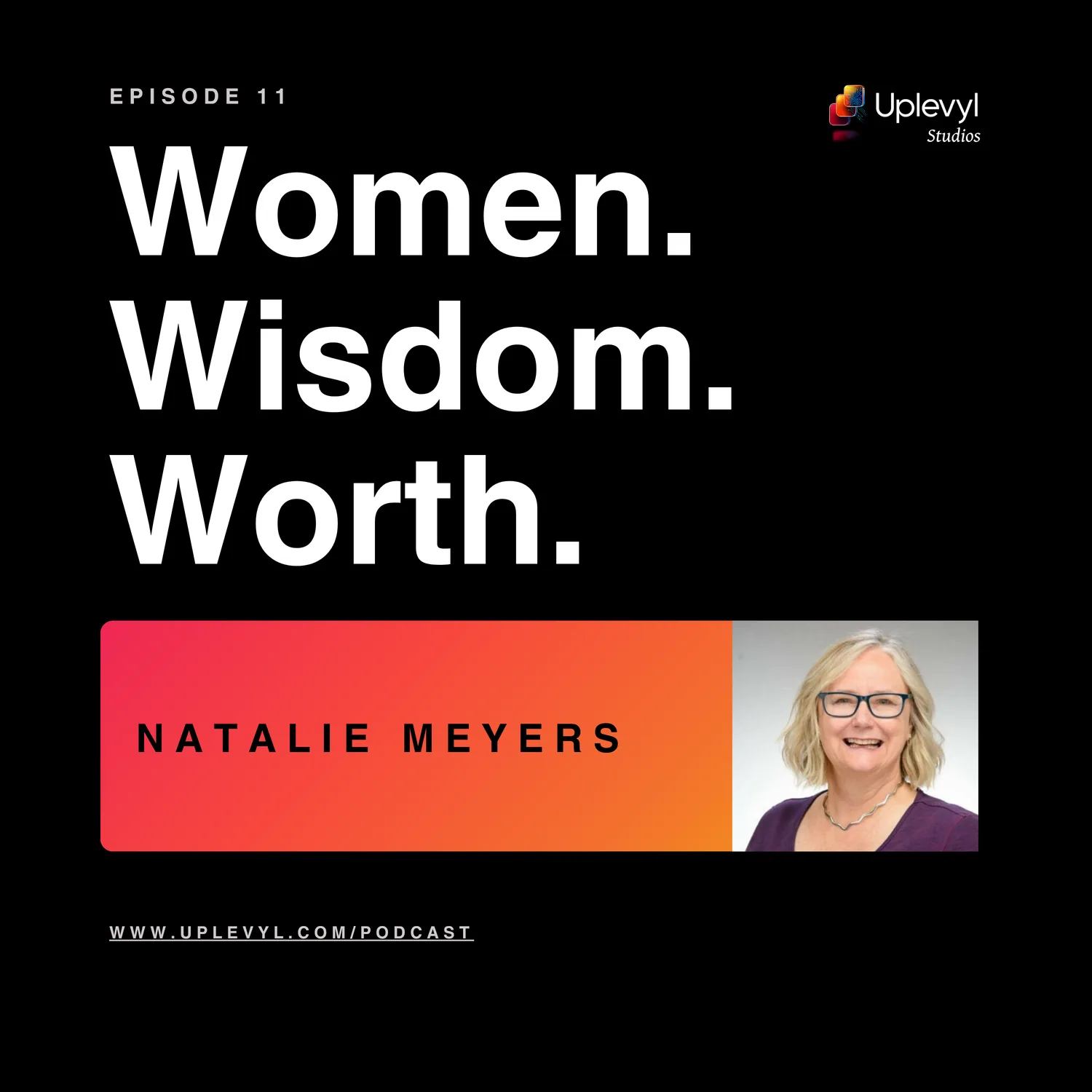
Sara Bhonsale: Welcome to Women Wisdom and Worth. I am really, really thrilled to, uh, introduce our guest today. Um. On this podcast, we dive deep into the groundbreaking work done by women advancing technology, data, and society. And today we have Dr. Natalie Myers.
She is a key figure at the Lucy Family Institute for Data and Society at the the University of Notre Dame. And her extensive expertise in data science as well as her deep commitment to ethical practices, um, is why. She is here with us today. Dr. Myers plays a significant role in developing data solutions aimed at addressing complex social issues.
And as part of Notre Dame's mission driven initiatives, Natalie is committed to leveraging data, not just as a tool, but. As a force for good, fostering inclusive, and socially responsible innovation, which she's working on today. And I'm excited to talk to her about what she's doing right now at this moment.
But, uh, Natalie's work exemplifies the institute's vision of interdisciplinary collaboration that bridges industry, academia, and. The public sector to create meaningful and impactful solutions for today's challenges. So welcome Dr. Myers. Thank you so much for being here today. Thank
Natalie Myers: you, Sarah. It's my privilege.
I love the podcast and um, it's a treat to be an interviewee.
Sara Bhonsale: Well, I am just in awe of all the work that you're doing and, and the importance and the timeliness of everything that you're doing. So I'd love to just open it up by hearing about your journey into the world of data science, um, but also like this social connection and how those two things came together.
What inspired you to get into, uh, the data or the, the ethical applications and implications of data? How'd you get here?
Natalie Myers: For me, it's a journey that started back in high school. I was a dual major in English and philosophy in high school and then again in college. And I learned about how stories and arguments were structured and how that influenced the way people acted on those stories in philosophy.
My area of study was logic, and through the study of logic, I learned the basics of what would later become my hands on computing and did. Data analysis work. Oh, wow. Um, key here was learning deeply what is a human problem, what is a computational or data problem. Mm-hmm. And that in today's world, many problems are all three.
And that, um, to have a career journey in data science is a place where you will never be bored within your career. I had a professor Howard Besser tell me that, that if I worked in geospatial analysis, I would never be bored. And he was right. Learning about and helping the world's people in places makes my work engaging, but also brings real world stories.
Across my desk every day and real world stories always have ethical implications and applications. Yeah. And it's up to us as professionals to identify those and to find, I. The ethics that fit the situation that are aligned with the professionals and the communities they're working with in such a way that they can communicate about a community's priorities and help find solutions together.
Sara Bhonsale: Was there a moment? Like an aha moment when you realized that there are layers that like a data problem is also a human problem and all of these things came together. Was there something like that Aha. Moment or.
Natalie Myers: I'm not sure if it was a moment or a series of moments. Okay. But after graduate school at uc, Berkeley in informatics.
Mm-hmm. I, uh, worked for a while in the academic sector and then created with another woman, co-partner, a um, business called Content Innovations, LLC. And we were a woman certified small business. And one of our differentiators. And our value to clients was that we listened. Oh yeah. We showed up in person and we listened.
Sara Bhonsale: Wow.
Natalie Myers: And we tried to listen across organizations to people in a variety of roles so that we could understand stand the informatics landscape. Within each client's problem space because many problems as all of us in data science will encounter. Mm-hmm. Have a financial aspect, a leadership aspect, and a Tech X.
Aspect, without all three of those in alignment, it's really hard to succeed. Mm-hmm. So we tried to understand the financial background for why clients wanted a solution or wanted an improvement, and we tried to understand the uh, championship within each organization. For that change. Yeah. And then we tried to understand the tech, was it affordable?
Was it a good fit for what people really did and would it help them achieve their goals? I had a project with Paccar early in the, um, growth of our company where they were a Six Sigma company and we had to show for any new technology. We introduced that it wouldn't take people any longer than the old way, took.
And to be able to show that uhhuh in seconds and minutes. So that really challenges people who have the attitude. The all technology, uh, advances are good because that added the, um, time metric. To helping people at the desk and on the keyboard for each informatics change. Mm-hmm. Actually have an efficiency change.
That was personal, so we couldn't introduce anything unless it would have one.
Sara Bhonsale: So the, you making that personal connection and you talked about like finding the championship reasoning is, is that correct? That's correct. You know, when we're working with an organization, uh, to solve a problem making or, or having a clear understanding of, of why that championship exists within the organization and, and.
I'm curious if when you're showing them this creates a, some efficient, um, benefit to your organization, do you see that championship increase and is that a big part of your model? I.
Natalie Myers: That's a good question for our company. Um, it was a big part of our success model with that client because it was part of their ethos.
Sara Bhonsale: Hmm.
Natalie Myers: It was part of what helped them be efficient, uh, be standards compliant and to achieve. Worldwide success in their information platforms that people relied on. Mm-hmm. Um, in other projects with other clients, what I have found is that in listening to the champions of tech projects mm-hmm. You can often hear the voices of those who are in pain or in Okay.
An area of cloudiness because they don't have all the information they need to do their jobs. Mm-hmm. Or all the leadership to know that they're doing their jobs in the right way. So for us, we could combine data and soft skills to bridge those gaps and to make sure that change could be positive. Mm-hmm.
Even though change can sometimes be painful. Yes. Often when we're changing in the tech world, we're changing from something old and familiar to something new that might not have the same features or that might require a little bit of upskilling. So it's always a people and a technology journey for me.
Yeah,
Sara Bhonsale: I am going to write that down. That change is. Positive, but it is often painful. I think that's so important to remember, whether we're talking about a people problem or a tech problem. Or an organizational change that needs to happen. I, I think that's really beautiful. So I wanna talk, uh, I, I really wanna dive into like your specific work.
So at the Lucy Family Institute, I hear that there's a very strong emphasis on interdisciplinary collaboration and ethical ai. I mean, that's essentially what you do. So can you talk about how. Institute approaches these goals and why they are so important, um, in today's landscape and, you know, why, why the Lucy Family Institute even exists, like why this work is so important.
Natalie Myers: Um, we approach, um, our goals through the lens of the university, which is a Catholic institution. Mm-hmm. And what that means, um, regardless of faith. Is that the Catholic mission prioritizes meeting the needs of the world's most vulnerable. That allows us to do perhaps unsexy, work on intractable problems.
Mm-hmm. In a way that those seeking the new and shiny, um. May not always be able to. Right? So we can live and work within very difficult problem spaces and help some of the world's most vulnerable people, um, through that mission priority. Um, we call this in the Lucy Institute, being adventurously collaborative in the search for solutions to the world's most wicked problems.
We know these are intractable problems. We know they will require, um, stamina to address. We know they will require fresh approaches. We know they will have successes and failures. Sure. What we hope for is to alleviate some of the world's pain while allowing people to find success. Growth and comfort within their communities by conquering mutual problems together.
Sara Bhonsale: And so the ethical AI piece of this is more altruistic than what I, uh, it feels like when we talk about ethical ai, typically on this podcast. And, and with, um, the guests that I've had, we are talking about. Programs, right. Or talk, uh, not social programs, but programming like the tech, uh, building blocks of this and, uh, and the design of ai.
It sounds like the work you do at the Lucy Institute is focused on the outcomes of tech. It is. We
Natalie Myers: are very pragmatic in the. Problem areas we choose to work in. Mm-hmm. And we're very pragmatic about real world impacts, whether they be with industry partners, community partners, or health partners, um, that allows us to, um, pilot minimally viable.
Products. Mm-hmm. And iteratively improve them. Mm-hmm. And customize them to meet the needs of groups. It also allows us to work in an environment where responsible AI is expected and rewarded.
Sara Bhonsale: Yeah.
Natalie Myers: Um, but to make sure that for us, that's also project aligned. So we build ai. To work on difficult problems.
Mm-hmm. And we choose to build and structure our approach to ai, um, with. Not just a nod toward responsible AI practices, but a deep found mission to, um, solve for bias to address areas where models are misaligned to redress problems when models are out of alignment, to make sure that any harmed party in a informatics environment where an AI is in place has an opportunity.
To bring forward a case and, um, find restitution or find, um, a way to, uh, write the problem that has impacted them. So we do the people part of the work and the tech part of the work in a cyclical fashion.
Sara Bhonsale: It's cyclical. It's cyclical. That makes sense. So it isn't the design in the building, but also in the ultimate outcome.
And so I wanna talk about one of the priorities of the institute, and that is to make data science accessible and build diverse capacity. I think that is very relevant to what we talk about on this podcast and to what Uplevel is doing and building. So could you share some of the initiatives, uh, in place to ensure that data science benefits.
More of us, especially marginalized groups. Sure,
Natalie Myers: I'm happy to do that. Um, I'll highlight a few programs and I'll call out that our location today is in our Institute Center for Civic Engagement, and I'm here today in the center's physical space with 50 people working on. Uh, problems within their civic lives.
Um, I, including community stakeholders, professors, local industry, local government, um, those projects can range from gun violence to improving street lighting. To building community centers and using GIS to help us locate them in the right places, um, they can involve. We have a project, um, called the Lead Project where we have developed with, uh, chemists on campus and our, uh, geographic analysis lab, a home-based LED test kit that helps, uh, households in the South Bend area.
To identify when, um, their house may be exposing their, um, young children to lead poisoning. We have one of the higher incidents of lead poisoning in the United States here in South Bend, and the way, um, lead testing is conducted in our schools and, um. Health, public health community here, um, leaves many people uncovered for tests till too late by testing homes either for children who, um, tested above the limits or testing homes.
For anyone who thinks that their house or the soil surrounding it could be, um, dangerous for their children, whether they're homeowners or renters, um, we can engage with them early in a civic capacity. And a community engagement capacity to get them the services they need to, um, redress, uh, potential, um, lead problems in homes, but also get kids the periodic testing they need to make sure that their homes become safe.
Um, we develop that low cost test ourself. On campus and made it available for free to the community, um, and run that, um, program with volunteers from the community as well as uh, students from the university. Um, literally going household to household with iPads and test kits and, um, it's making a difference in our community that is felt both in our housing infrastructure.
But also in our schools and um, in individual households.
Sara Bhonsale: It sounds like your work is making such a direct impact within the communities that you serve. Um, I'm an educator. I talk about this a lot. I've been in education for the majority of my career, which is of course, you know, fe female dominated in, in the spaces that don't typically make the decisions.
Um, I would love to see more women come into the fields of AI and data science because we tend to be the more social, impactful making these immediate. Impacts in, in our communities. Um, can you share a little bit about, we're kind of shifting gears here, but, um, because women are underrepresented in the fields of AI and data science, unless it comes down to doing that immediate community work, what are some challenges that you, as a woman has faced in this area and, and how?
If you can talk a little bit about what the Lucy Family Institute is doing to address the gender gap.
Natalie Myers: That's a great question, and of course there are multiple answers. Um, I've been the only at a lot of tables through my career. I.
Sara Bhonsale: Yeah.
Natalie Myers: Um, I've also done some work on the retention of women faculty and graduate students, and continued my interest in the representation of women in the data science and um, computer science workplace.
All those things spurred my interest in learning about the challenges women face. In the profession of artificial intelligence and I'm thrilled to be working at Lucy where, for example, health equity is one of our problem areas. Um, working in collaboration can dule some of the pains and make it easier to go the dis.
Distance without burnout when you're working on wicked problems that are often intractable and require continuous attention. Mm-hmm. And fresh approaches in multiple problem spaces. One of those problem spaces is the retention of women in tech careers. Um, we were trying, and here I use, um. The big, we all caps, um, to get back to 20% female representation in computing science and technology careers by 2020.
Mm-hmm. Um, after the highs in the 1980s, we didn't succeed at Lucy. One of our pro. Pro programs is called I Treads. It was originally funded by NSF, and we have found a lot of traction in that program with female students. We've had 71% female participation in I treads, and what that program did was match students from all disciplines with professors to work on mentored projects in data science.
And what we found was that by doing that, allowing a woman student to stay within her discipline and not have to move to data science or computer science as an undergraduate major, mm-hmm. They could meaningfully undertake data science projects within their disciplinary area of interest, advance both their careers.
Uh, as graduates of the university, but also advance their, um, collaborative skills on data science teams. And that's a real key. Data science. Um, we picture someone in the basement with a keyboard. Data science is meetings, listening goals, lather, rinse, repeat. Um, we don't do it in isolation and we don't do it.
One and done. And that means absolutely communicating.
Sara Bhonsale: Absolutely. We, uh, we talk a lot about like having your core skills in your discipline. So many women that I've spoken to, um, who are doing fantastic work, like what you're doing at Lucy Family Institute, where like we bring in our, our core discipline, our core skills where we've spent a lot of our lives.
Working and, and helping and solving those problems and then putting that layer of data science on top of it because like exactly what you said, it is not sitting in front of a computer. And I think that is a big challenge for us as, as professional women, um, in, in any field, regardless of where you are in terms of your data science acknowledgement.
It's not sitting in front of a keyboard and doing programming, although that absolutely could be part of it, but it is integrated in everything that we do and taking away that stigma of this not being for me or, uh, this isn't relevant to my work, when we just acknowledge this is something we do every day.
Also. Congratulations on that 71% statistic. That is fantastic work. You should celebrate that. Uh, that's beautiful.
Natalie Myers: Uh, it's a game changer here. And it influenced our data science minor program and it also influenced the campus as a whole. We now offer a, um, computing science, uh. Path through our College of Arts and Letters, as well as through our College of Engineering, so students can do their degree work as undergrads.
Um. Still in a tech track, but within very different disciplinary, uh, focus areas. And we find that here as well as in many other, um, universities where data science is offered that. We will have more minority and female engagement in those programs that have a data focus that is pragmatic, that is community or problem space oriented, because.
Women and minorities often have a problem space they want to make the world better in, and they're more attracted to data science and its pragmatic ways of iterating a problem and iterating solutions and measuring achievement. This helps us to help those we love and the places we're interested in. So it's a great companion to a traditional computing science program for undergraduates.
Sara Bhonsale: Uh, a hundred percent. And also just a great way for us to still feel like we're making active change, but keeping up with, uh, the immediate efficiency and keeping up with. Just how quickly technology is, is ingratiating itself into everything that we do, but still staying true to our core values, right?
That's not just our core disciplines, but our values. Um, so I do want to talk about AI ethics and the work that you're doing there, because of course, like that is in our fields. Oftentimes it's the first thing that we talk about. And anybody who doesn't. Have a, a very cursory, or who does have just a very basic cursory understanding of ai.
Usually the first thing that they want to talk about are the ethics around it. Uh, that I think is just the initial attraction to AI is like, how will this affect. World and how are we, uh, staying ahead of it? And I know this is a big part of the work that the institute is doing. So how does the institute guide its research and development to ensure that our data sciences and our AI solutions in development are ethically sound?
Natalie Myers: Um, that's a great question and I'm going to give a few answers. Okay, great. I'm going to give a top down answer first in that Notre Dame is one of the signatories of the Rome call for AI ethics. I believe. Uh, IBM was one of the originators, and we also hold an IBM Tech Ethics Lab here on campus. Mm-hmm.
Its director is. A member of the Lucy Institute and they award grants in these problem spaces. Um, but the whole university is guided by that, um, signatory effort with the Rome call. Um, another area that we, um, guide our research and development to ensure that our AI solutions are ethically sound is through our visiting professorship opportunities with the institute.
Um, we really pleased right now to be hosting k Firth Butterfield as a scholar in residence. She's working with, uh. Responsible, uh, artificial intelligence for chemistry project where she's helping us train students within our, um, CAS project in, um, computer aided synthesis in chemistry, um, to, uh. Both have practical and responsible AI solutions within these, um, chem AI projects.
And it's just one example of whereby allowing students to encounter. Ethics, not just in ethics class, in the philosophy department, but also in chemistry with world experts like Kay. We hope to engender in them and in their careers and knowledge of how ethics helps organizations stay aligned with, um, their customers and communities needs, and helps them stay aligned with.
World trends in evolving ai, uh, regulatory and policy landscapes. Um, AI and the regulation of AI and the ethics of ai, it's a rapidly changing space. Yeah. And it's very important for us to expose our students to the realities of that. Mm-hmm. Mm-hmm.
Sara Bhonsale: And you mentioned, you know, outside of your. Ethical your ethics class or outside of just that, that, um, had a great time.
What am I trying to say? Like, you're just encased in a, in a course, and it's not, it's somewhat isolated, but the practical application of our ethics, which is something that we wake up every day and make these decisions. Right. And, um, without getting too deep into the, into the philosophical. Implications of this.
This is just something, you know, that we, we do every day. And so when we're engaging with technology, I think that is why that's initially like a lot of our first toe into the water of AI is like, how does this affect. The world going forward and understanding. Yes. Um, when we examine the implications of this, when we dig into it, when we're designing this, yes, this helps our customers, but coming back to what we were speaking about before, it ultimately we're, we're trying to make the world better.
Right? Especially with the work that, that you're doing at the Lucy Institute. It's meant to like, um, close the gender gap and, and help marginalized groups and help our, our problems in the world. So. I, I love that idea of the practical application and, and the work that you're doing. Um, I know you are in the middle of.
Very special day today. So I don't wanna keep you, uh, although I really wanna talk to you about so many other things, so maybe we'll need to, to have a, a part two to, to this episode. But can you share what is next for the Lucy Family Institute and where you see, where you see the role of women evolving in AI and data science in the coming years, especially with the work that you are doing?
Um. To build those numbers up and bring women into the space?
Natalie Myers: Um, that's a great question. I mentioned 20% before. Um, I'd like to see us get to 20% and keep going. Mm-hmm. Um, it looks like. We could have in the US and in many countries globally, 40% female representation in data science and growing. Um, that's a wonderful news for women and their careers.
It is making data science an attractive area for women to work and grow their careers and to start their journeys as students. Mm-hmm. Um, podcasts like this one, groups like women in AI governance. They'll help, uh, continue to raise awareness of these problems. Collaborations will form careers, will be dedicated to the problem hopefully with those careers.
Um, will succeed with, will become our next generation successes as well. That's our job here at University of Notre Dame to train the next generation of researchers, but also the next generation of businessmen and women. The next generation of people in all walks of life. From the next generation of ministers to the next generation of teachers to the next generation of lawyers, we want ethics to be part of.
All those careers and we want women to be part of all those careers. I did a quick check-in with a, um, member of my team, um, before this call, um, who works on pediatric cancer in Mexico with a project we have there. Her name is, um. Angelina Garcia and what she, um, helps us understand, um, and talk to me about really resonated, which I asked her, um, her project is.
A data science project to, um, improve the outcomes of pediatric cancer patients at a hospital in Mexico City. It's a hospital that serves, um, the pediatric population there. Um, after Covid, the number of pediatric, pediatric cancer patients in need increased there, they had 145 beds serving all of South and central Mexico.
Sara Bhonsale: Goodness. Wow. And,
Natalie Myers: um, Anika, what she, um, has been doing is, um. Working with the, um, um, 5,000 cases that, uh, come through the hospital annually to enroll, um, these pediatric patients and their families in a data science program that we have done in conjunction with the hospital, and it allows patients to return home more quickly.
What that means is that families are less disrupted and they have to spend less time in Mexico City and can return to their towns and villages where the rest of the family is located. Often a child having cancer leads, um, mother to leave the household and accompany the patient to the hospital for weeks or months at a time.
Um, what Anika told me about her work was, um, that, um, she said, I pray when I work my, um. Field experience. My life experience has led me to a time when, whether there's an ocean or a mountain in front of me, I'm ready to cross it. She said, my work is in service not for personal achievement. Um, therefore I can face any data challenge.
Wow. She says, I'm grateful for Lucy and the university and our country where everyone has been willing to do so. Something relevant in this situation, and that is the preciousness of her moment and what she is thankful for in her work at Lucy. Um, what they have done, um, with their app is for these pediatric cancer patients, um, they would typically have when they had, um, fever and neutropenia, only one hour.
To get the lifesaving help they needed, which was difficult in, um, many household scenarios with Anika's app. Um, they now are prompted and can get messages to residents at the hospital that will respond quickly and they also are using an LLM and change the algorithm to, um, be aware of previous signs and symptoms in the patients.
That might show an uncommon. Oncoming or imminent complication. Now those patients have three hours.
VO: Wow.
Natalie Myers: So, wow. Work like Annika, work with LLMs, work with the data ethics that was so important to getting her project through the institutional review board. There's a lot of patient privacy involved with these young children's treatments.
They often have a hundred treatments per year. In order to survive, they are worn out and so are their caregivers.
Sara Bhonsale: Mm-hmm.
Natalie Myers: Um, Anika's app helps them get home sooner and be with their families where they're happier and that's giving them better chance of survival than staying in the hospital where they might, um, be infected, um, by hospital borne infections.
So. We work in a crucible of data science and society's problems, but our successes are human, both for people like Anika in her career, but also for each of those patients and their parents, and those are the outcomes we hope for in our
Sara Bhonsale: jobs. So what I am taking away from our conversation today is that when we lead with a service outcome, when we lead with an altruistic or a societal outcome, you know, human outcome I think is, is what you said.
Um, that is essentially, I think that's a good North star for us. Um, it's a great north
Natalie Myers: star for us in our. Volunteer lives mm-hmm. In our professional lives. In our personal lives, in our generational lives, we're impacting those younger than us and we're supporting those older than us in so many scenarios of women's lives.
Sara Bhonsale: Absolutely. And to bring it back to the data science of it all, right? When we lead with that community outcome, that service outcome, um, the data science. And the results of that, or the outcomes of that. Just creating a better space for women, not just in the design and development of this, although that's what we talk about all the time that's right here.
Uh, but also just creating the space for caregivers and women to have more time. Uh, like I was thinking about that hun, 100 visits and, and just the. The strain, the emotional strain, the financial strain, and allowing, uh, women just a little bit more freedom in what we're able to do with data science when we are leading with that community outcome and when we are leading with that human outcome.
So just such a beautiful, such a beautiful way to end this conversation. Thank you so much for the work that you're doing, Dr. Myers, and, um, how can we get in touch with you? What's the best way to, to, uh, reach out?
Natalie Myers: Let's stay in touch through email and stay in touch through Lucy's social channels. And I would love to not only continue as a listener of the podcast, um, but also to, um, um.
Improve my own understanding of the challenges we're all facing. Um, the, uh, the women worth and wisdom, uh, mantra helps us to achieve together. So thank you.
Sara Bhonsale: Well, we will definitely keep in touch and for our listeners, they can find you on LinkedIn and the Lucy Family Institute's social channels is that
Natalie Myers: They can indeed.
I'm Meyers. Um. On, uh, LinkedIn. You can find me on there. You can find me@lucyinstitute.nd.edu. And um, my email for listeners is natalie.Myers@nd.edu and we'd love to hear from you, particularly if you're working on a wicked problem.
Sara Bhonsale: Yes, I, uh, was just going to. Slug the website. There is so much to engage with there in terms of just knowledge about what is happening, statistics, but also support for, uh, people and women doing great work to solve the world's problems.
Um, definitely check it out. That's lucy institute.nd.edu and then, uh, find Dr. Myers on LinkedIn and uh, hopefully we can have you back and check in and. See how your projects are going and get, uh, that 20 up to 40 and see where your 71% is the next time. That's right. So thank you so much for your time today.
Thank you
Natalie Myers: so much, Sarah. Bye now.
VO: Thanks for joining us today on Women Wisdom Worth, the podcast series from Uplevel, where we learn from women around the world about what they're doing to find success and joy in this digital age. For show notes and free bonus resources, visit uplevel.com/podcast. We'd love it if you subscribe, like leave a nice review and share the show with any friends and colleagues who are looking for fresh ideas on how to help women find success and joy in this digital.
Age and remember to check out Uplevel Uplevel is the global leader of women trained generative AI transforming society and business featuring women centric data inputs, insight and advice. You'll find all the answers you need in a way that works for you as you navigate the complexities of modern life.
Thanks, and see you soon.